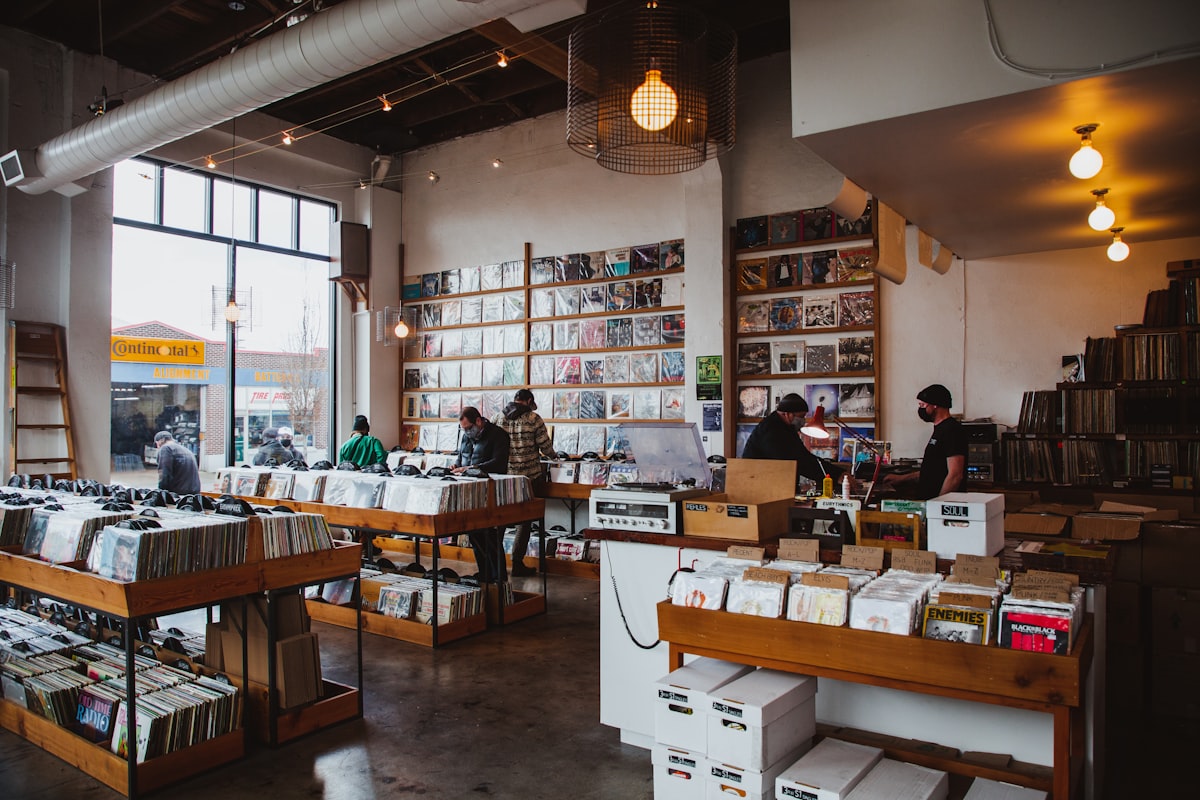
It started, like a lot of good ideas, with someone typing faster than they were thinking. The history of Record Store Day begins in 2007, when Chris Brown (the co-owner of Bull Moose Music in Portland, Maine, not the singer) fired off an email to a group of independent record store owners with the subject line "idea." The pitch was simple: a national event to drive people into indie stores. Something along the lines of Free Comic Book Day, but for records. Get some exclusive releases, get some press, remind people that the shops are still here.
The email landed during a meeting of indie store owners in Baltimore. At the time, independent record shops in America were in genuine trouble. Digital downloads were eating into CD sales. Peer-to-peer file sharing had spent the best part of a decade making free music the default for an entire generation. Vinyl was a relic. In 2007, fewer than a million LPs were sold in the entire United States. The UK wasn't much better: under 200,000 units that year, a number so small it barely registered in industry reports.
Brown's email became a brainstorming session. The session became a plan. And on Saturday 19 April 2008, Record Store Day happened for the first time.
Year one: 300 shops, 10 releases, and Metallica in a car park
About 300 independent record stores across the US took part in the first Record Store Day. There were roughly 10 exclusive releases, from artists including Death Cab for Cutie, R.E.M. and Vampire Weekend. Metallica spent hours at Rasputin Music in Mountain View, California, signing records and meeting fans in the car park. They'd become synonymous with RSD over the years.
In the UK, Billy Bragg helped launch the event. Key British shops, Piccadilly Records in Manchester and Rough Trade in London among them, joined in from the start. It was modest. It was enthusiastic. And it worked. The following year, 85 exclusive releases were pressed, over 500 artists made in-store appearances (including Tom Waits, Bob Dylan and, improbably, Slayer), and more than 1,000 stores from Japan to Germany signed up.
By 2010, the initiative had grown enough to launch a second annual event: Black Friday Record Store Day, held each November. Joshua Homme from Queens of the Stone Age served as that year's ambassador, a role that would become one of the event's most distinctive traditions.
The ambassador years
In 2009, Jesse "Boots Electric" Hughes from Eagles of Death Metal more or less appointed himself the first RSD ambassador, shouting about independent stores to anyone who'd listen. The role stuck. Each year since, a high-profile musician has been handed the sash (sometimes metaphorically, sometimes an actual sash) and asked to champion the cause.
The list reads like a festival headliners board: Ozzy Osbourne (2011), Iggy Pop (2012), Jack White (2013), Chuck D from Public Enemy (2014), Dave Grohl (2015), Metallica again (2016). In 2017, St. Vincent became the first woman to hold the title. Run the Jewels followed in 2018. Pearl Jam in 2019.
Taylor Swift became the first "global" ambassador in 2022, a distinction that acknowledged how far the event had stretched from that Baltimore meeting room. Elton John had received the first-ever "Record Store Day Legend" title back in 2017. By 2024, Paramore and Kate Bush were sharing the role. For 2025, Post Malone took the US ambassadorship while Sam Fender, already one of the UK's biggest vinyl-selling artists, represented the UK.
This year, Bruno Mars carries the title.
The vinyl revival it didn't quite plan
Here's the thing nobody expected. Record Store Day was designed to save indie record shops, not to revive an entire format. But the timing was extraordinary. The event launched in 2008, right at the bottom of vinyl's decades-long decline. What happened next looked, on a graph, like someone flipped a switch.
Between 2007 and 2025, UK vinyl sales went from under 200,000 units to 7.6 million: a near-fortyfold increase across 18 consecutive years of growth.
How much of that was Record Store Day? That's the pub argument that never quite gets settled. The vinyl revival had multiple engines: nostalgia, streaming fatigue, the tangible appeal of a physical object in an increasingly digital world, clever marketing from labels who spotted the format's collectible potential. But RSD gave vinyl something it desperately needed. A calendar event. One day a year when vinyl was the story. When newspapers ran features, TV news crews filmed queues outside shops, and people who hadn't bought a record in years walked into a store and remembered what they'd been missing.
Megan Page from the Entertainment Retailers Association, the organisation that runs RSD in the UK, put it well: "Record shops coming together and asking for these exclusives, celebrating the art of vinyl, was the catalyst for people to take more notice of it and take it a bit more seriously."
The numbers back her up. In 2025, RSD delivered the highest weekly vinyl sales through UK indie shops since at least 1994. Indie stores' share of vinyl sales that week jumped from the usual 34.6% to 72.1%. Nine of the ten top-selling albums on the day were by UK artists.
The other side: when the party got complicated
No honest history of Record Store Day skips the controversies. They started around 2014 and haven't fully gone away.
The pressing plant problem was the first and most concrete. RSD releases are manufactured months in advance, and by the mid-2010s the event had grown so large that it was monopolising pressing plant capacity. Kudos, a London-based indie distributor, published a blistering blog post in 2014: "Right now, we have 20+ manufacturing jobs in production, all of which have come to a grinding halt while the pressing plants make hay by pressing up umpteen thousand Oasis LP reissues, Abba 7"s and REM box sets." One plant, they said, had refused any order under 500 units until after Record Store Day. For labels running on margins so tight they could feel the draught, those delays meant lost momentum, missed release windows and, in a few cases, cancelled records entirely.
Two UK indie labels, Sonic Cathedral and Howling Owl, went further in 2015. They launched a website called recordstoredayisdying.com, announced a split single that would release one copy per day for 365 days rather than a limited batch on a single morning, and published an open letter accusing the event of being co-opted by major labels.
Then there was the flipping. Within hours of shops opening each RSD, eBay would fill with exclusive releases at two, three, four times their retail price. Fans who'd missed out could either pay the scalper's premium or go without. The organisers tried to crack down, contacting sellers and warning shops, but the problem persisted. When you manufacture scarcity, someone will always try to profit from it.
RSD responded to most of these criticisms, gradually. The number of releases, which peaked at 643 in 2014, was trimmed. Pressing plant capacity expanded as new plants opened across Europe. The minimum pressing run of 500 units, a rule designed to ensure shops could actually stock the releases, remained a sticking point for micro-labels, but the organisers argued it was the bare minimum for nationwide distribution.
And here's the counterargument the critics rarely acknowledge: for all the logistical headaches, RSD kept shops alive. The number of independent record stores in the UK roughly doubled between 2008 and the mid-2020s. By 2025, over 300 indie shops participated. For many of them, that one Saturday in April is their single biggest trading day of the year.
The year the shops went dark
In 2020, Record Store Day was scheduled for 18 April. By March, most of the world was in lockdown.
The event was postponed once (to June), then again, and eventually split into three "RSD Drops" across August, September and October. No queues. No live performances. No community gathering. Shops that were allowed to open operated under strict social distancing. Many shifted to online-only sales for the first time.
It was, by every measure, the strangest Record Store Day in history. But it also proved something important: independent record shops were more resilient than anyone had given them credit for. They adapted. They delivered. They survived. And when the event returned properly in 2021 — spread across two dates in June and July with Fred Armisen as an endearingly unexpected ambassador — the queues came back like they'd never left.
Eighteen years on
Record Store Day 2026 falls on Saturday 18 April. Over 300 UK and Irish indie shops will participate. More than 540 exclusive releases will hit the shelves. Bruno Mars is the ambassador. The queues will form early, the good stuff will sell fast, and by midday someone on social media will be complaining about a Bowie reissue they missed.
None of that was inevitable. In 2007, when Chris Brown typed "idea" into the subject line of an email to a handful of record shop owners, the vinyl market was in intensive care and indie retail wasn't much healthier. Record Store Day didn't singlehandedly reverse those trends, but it gave them a stage, and it gave vinyl a story.
If you're heading out on 18 April, our RSD 2026 Survival Guide has everything you need to know about the day itself, and our curated list of the releases worth queueing for covers the highlights from the full list. Find your nearest participating shop on findyl's local store finder or at recordstoreday.co.uk.
Half Man Half Biscuit released a song called "Record Store Day" last year. It mocks the event for overpriced reissues of records nobody asked for. They're not entirely wrong. But the shops are still here. And that email worked out alright.