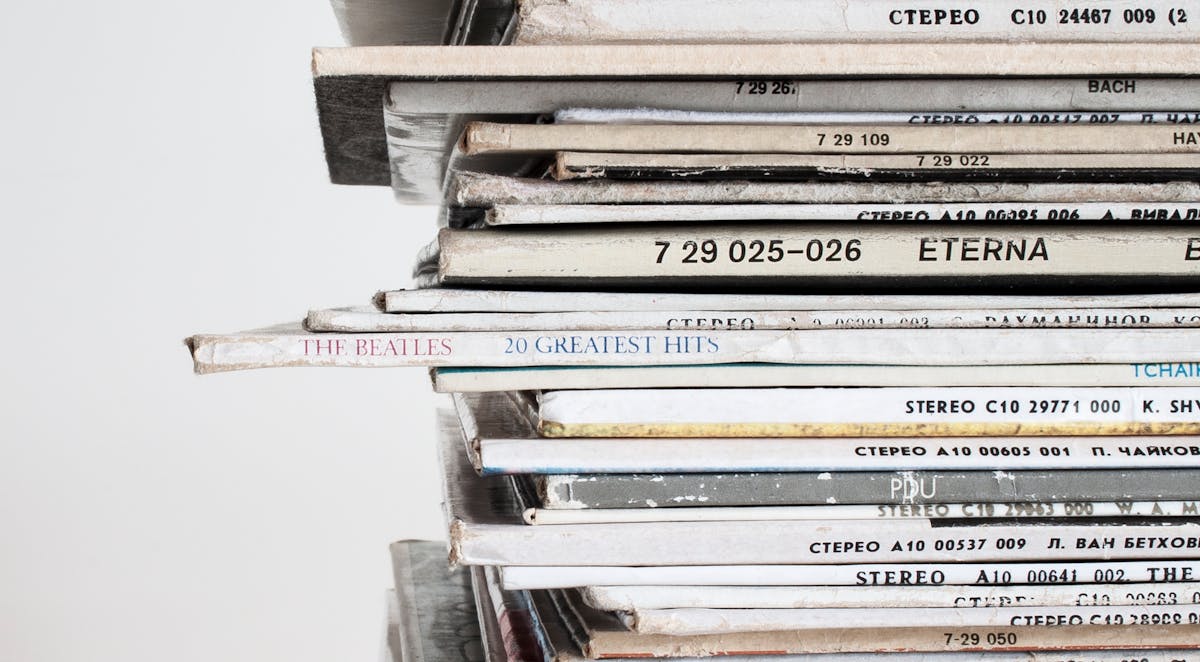
You've spent good money on your records. Maybe a lot of good money. The least they deserve is somewhere better to live than a leaning stack on the floor next to your turntable, slowly warping under their own weight while you tell yourself you'll sort it out at the weekend.
Storing vinyl correctly isn't complicated, but it does matter. Done right, your records stay flat, quiet and in the kind of condition that holds their value for decades. Done wrong (and "wrong" includes some very common habits) you're looking at warps, surface noise, ring wear and jacket damage that no amount of cleaning will fix.
Here's everything you need to know.
Always Store Vertically
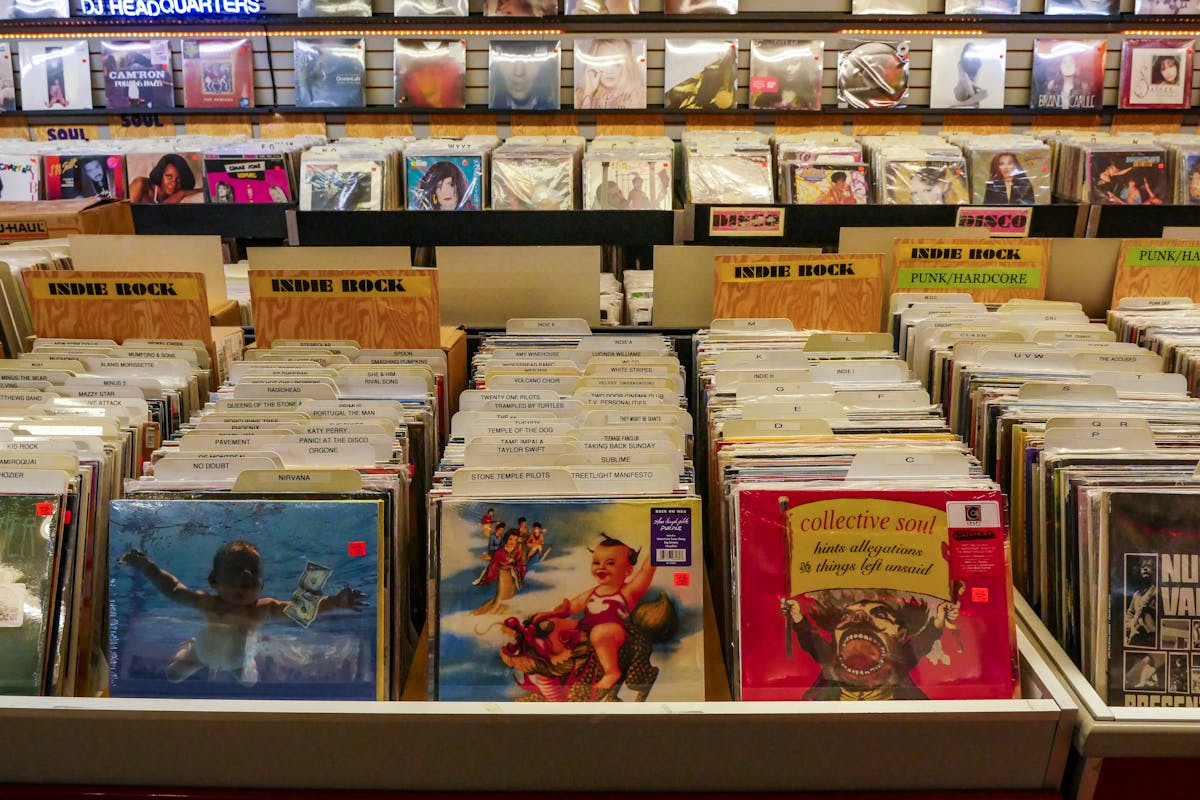
This is the single most important rule of vinyl storage, and the one most people break first. Records must stand upright, like books on a shelf. Never stack them flat in a horizontal pile.
A single LP weighs around 120–180g. Stack twenty of them on top of each other and the bottom records are bearing several kilos of sustained pressure across their entire surface. Over weeks and months, that pressure causes warping. It's a subtle, sometimes invisible bend that turns a perfectly good pressing into something that makes your tonearm bounce like a seismograph during an earthquake.
Flat stacking also causes ring wear, where the weight of the records above presses the outline of the vinyl through the jacket below it. That faint circular mark on an otherwise pristine sleeve? That's ring wear, and it's permanent.
Stand them up. Keep them snug enough that they don't lean at an angle, but not so tight that pulling one out feels like a game of Jenga. A slight lean is actually worse than a gentle squeeze. Records that tilt at 15 or 20 degrees will gradually warp towards the lean over time.
Get the Temperature and Humidity Right
Vinyl is PVC. PVC doesn't love extremes. The sweet spot for storage is roughly 18–21°C with humidity around 45–50%, which is also the range where most people feel comfortable living. If you're fine in the room, your records probably are too.
The places to avoid are the ones that sound obvious once you think about them but catch people out constantly: lofts (freezing in winter, baking in summer, often damp), garages (temperature swings, moisture, concrete floors that wick cold), conservatories (direct sunlight, greenhouse effect), and anywhere near a radiator or south-facing window.
Direct sunlight is particularly brutal. UV degrades PVC over time, and the heat from sustained sun exposure can warp a record in hours. If your shelves catch afternoon sun, move them or draw the blinds. It sounds excessive until you've watched a £30 coloured pressing turn into a Pringle.
Replace Your Inner Sleeves
This is the single cheapest upgrade you can make to your collection's longevity, and most people don't do it.
The paper inner sleeves that come with most new records are functional but flawed. Over time, paper sheds microscopic fibres that settle into the grooves and cause surface noise: that gentle crackle and hiss that gets slightly worse every year. Paper sleeves can also scuff the vinyl surface when you slide the record in and out, particularly if the paper has any texture or printing on it.
Anti-static poly-lined inner sleeves solve both problems. They're smooth, they don't shed, and the anti-static properties mean they actually repel dust rather than attracting it. Brands like MoFi, Spincare and Big Fudge all make good ones, and they cost roughly 15–25p each. A trivial investment relative to what you've spent on the records themselves.
When you replace the inner, keep the original if it has printed lyrics or artwork. Slip it behind the record inside the jacket rather than binning it. Some collectors value original inners, and you might want those lyrics someday.
Use Outer Sleeves Too
Outer sleeves are the clear polypropylene covers that go over the entire jacket. They protect against shelf wear, dust, moisture and the general grubbiness of being handled. They keep the jacket artwork looking sharp and prevent that soft, fuzzy edge damage you see on records that have lived unprotected on a shelf for years.
Resealable outers are worth the marginal extra cost. They seal the top edge, keeping dust out completely, and make it easy to slide the jacket in and out without wrestling with a tight fit. Standard open-top outers work fine too, but resealable ones are noticeably better at keeping things clean over time.
A hundred outer sleeves costs around £10–15. If you're spending £20–35 per record, that's a sensible bit of insurance.
Choose the Right Shelving
The IKEA Kallax (and its predecessor, the Expedit) became the default vinyl storage unit for good reason: the internal cube dimensions are almost exactly the right size for 12-inch records, it's sturdy enough to handle the weight, and it's affordable. If you're starting out and don't want to overthink it, a Kallax will serve you well for years.
Whatever shelving you choose, the key considerations are: strength (records are heavy; a full shelf of LPs weighs substantially more than a shelf of books), depth (you need at least 33cm to fit a 12-inch record without it poking out), and rigidity (shelves that bow under weight will let your records lean and warp).
Avoid anything with thin, unsupported spans. A floating shelf that looks elegant with a few coffee table books on it will sag alarmingly under sixty LPs. Purpose-built record storage units, cube shelving and solid timber bookshelves are your best options.
Don't Overstuff Your Shelves
This one's a balance. Too loose and records lean. Too tight and you get seam splits. Those are the tears along the top or bottom edge of the jacket caused by forcing records in and out of an overpacked shelf. Seam splits are the most common form of jacket damage among active collectors, and they're entirely avoidable.
You should be able to slide a record out with one hand without needing to grip it from the top edge. If you're pinching the jacket to yank it free, the shelf is too tight. Leave a centimetre or two of breathing room per section, and use a bookend or divider at the end to keep everything upright without compression.
Handle Gatefolds and Box Sets With Care
Gatefold sleeves (the ones that open like a book) need a little extra thought. Store them with the opening facing upwards so the record doesn't gradually slide out under gravity. A record that's spent six months slowly edging out of a downward-facing gatefold will have a scuffed edge and a stressed spine to show for it.
Box sets and multi-LP releases deserve extra shelf space. Don't cram a triple-gatefold box set into the same tight row as your standard single LPs. It'll warp the box, stress the spine, and make the whole section harder to browse.
Quick-Fire Mistakes to Avoid
A few common habits that cause more damage than people realise:
Leaving a record on the turntable after playing it. The platter and mat collect dust, and the exposed vinyl surface is a magnet for anything floating in the air. Put it back in its sleeve when you're done.
Storing records near speakers. Bass vibrations can cause micro-movement that slowly wears grooves over time. It's a subtle effect, but if your shelves are right next to a subwoofer, consider moving one of them.
Using carrier bags or cardboard boxes for long-term storage. Fine for transporting records to a friend's house. Terrible for anything longer than a week. Plastic bags trap moisture. Cardboard attracts mould in damp conditions and offers no structural support.
Handling records by the grooves. Always hold by the edges and the label. The oils from your fingers settle into grooves and attract dust that bonds to the surface. If you've been handling records carelessly, a proper wet clean will help — have a look at our cleaning guide for the full walkthrough.
It's Worth the Effort
None of this is difficult or expensive. A set of inner sleeves, a pack of outer sleeves, a decent shelf and a bit of common sense about temperature. That's all it takes. The payoff is records that sound as good in ten years as they did the day you bought them, and jackets that still look like they belong in a frame rather than a charity shop bin.
And if you're buying used vinyl — where condition is everything and the difference between a VG+ and a NM copy can be fifteen or twenty quid — knowing how to store correctly means knowing what to look for in a seller, too. A well-stored collection tells you a lot about the person who owned it.
Your records are worth looking after. Give them somewhere decent to live.